Procedure or trigger declaration should not end with semicolon
In AL the semicolon is a statement separator, not a statement terminator. A semicolon after a procedure or trigger declaration suggests that another statement follows — but what follows is the begin...end body, not a statement. The compiler accepts the trailing semicolon, but it contradicts the language’s own syntax rules.
Remove the trailing semicolon from the declaration.
Example
codeunit 50100 MyCodeunit
{
    procedure CalculateTotal(Quantity: Decimal; UnitPrice: Decimal): Decimal; // Procedure or trigger declaration should not end with semicolon [FC0001]
    begin
        exit(Quantity * UnitPrice);
    end;
}
Remove the semicolon from the declaration:
codeunit 50100 MyCodeunit
{
    procedure CalculateTotal(Quantity: Decimal; UnitPrice: Decimal): Decimal
    begin
        exit(Quantity * UnitPrice);
    end;
}
Why
We’ll have to go all-the-way back to the C/SIDE Introduction in Microsoft Dynamics NAV 2009 :
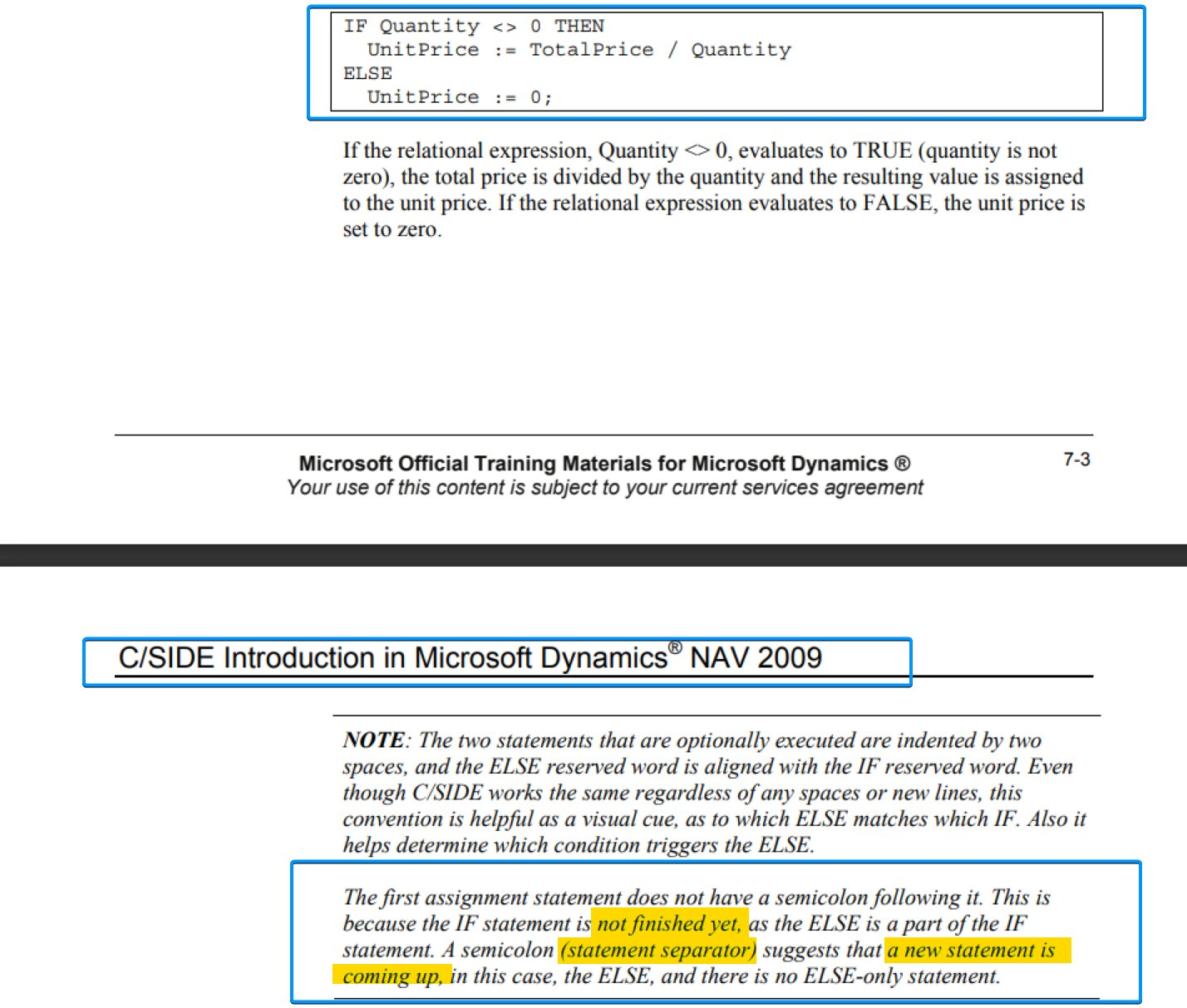
A semicolon (statement separator) suggests that a new statement is coming up.
And if we even go further back, on the C/SIDE Application Designer’s Guide, dated 1996 , we find:
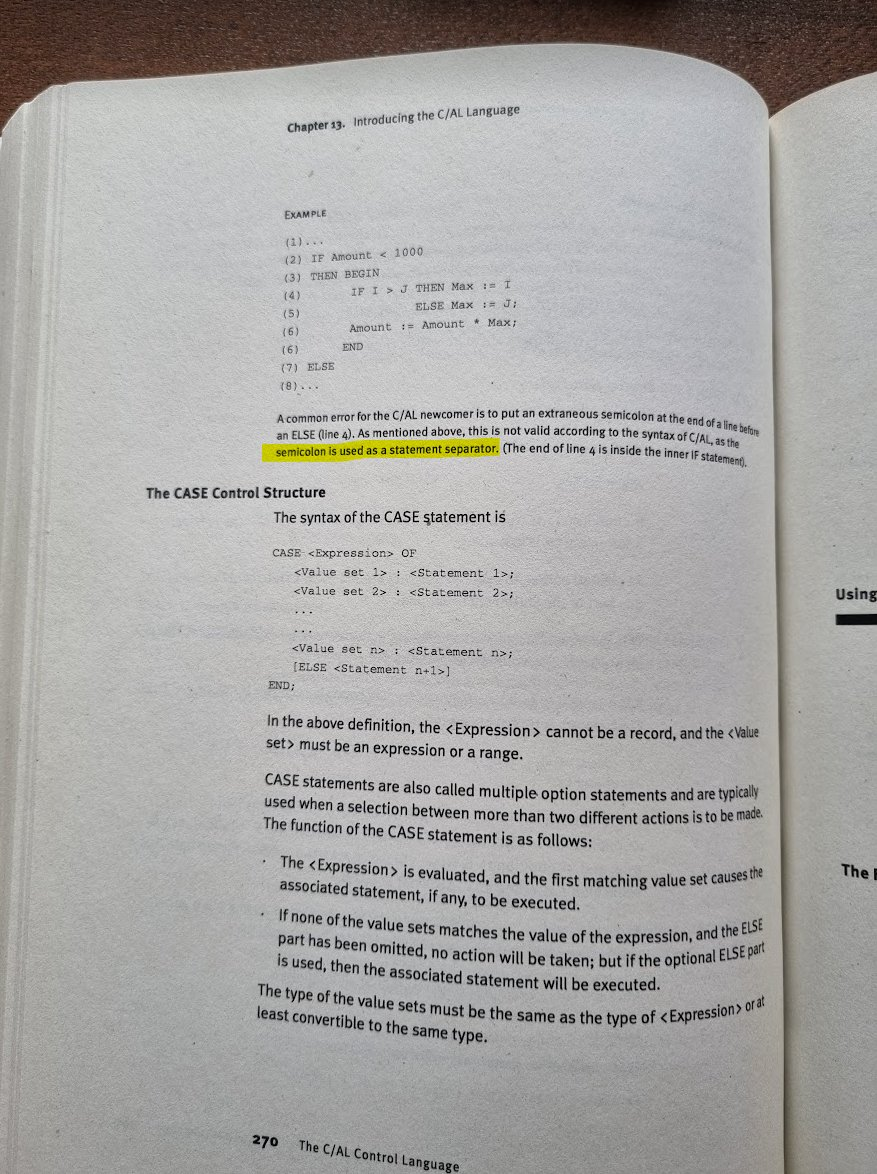
A common error for the C/AL newcomers is to put an extraneous semicolon at the end of a line before an ELSE. As mentioned above, this is not valid according to the syntax of C/AL, as the semicolon is used as a statement separator.
So based on the documentation, syntactically the “;” is not something that ends a statement in (Pasc)AL, but it actually is a separator symbol to separate statements. That’s why procedure declaration should not end with semicolon and also the reason why you can omit it for the last statement.
Exception
Interface methods, control add-in procedures, and control add-in events have no body — the semicolon is required by the compiler to terminate the declaration:
interface MyInterface
{
    procedure MyProcedure();
}